Film critic Jeremy Scott from Cinema Sins takes a look at all of the "movie sins" in Pixar's 2017 animated fantasy film, Coco...(Read...)
Read the full article here by Likecool
Film critic Jeremy Scott from Cinema Sins takes a look at all of the "movie sins" in Pixar's 2017 animated fantasy film, Coco...(Read...)
Today Glitch, the “friendly community where you’ll build the app of your dreams”, is officially “tearing off the beta label”. To celebrate, they’ve made a major announcement each day this week.
The announcements include Glitch for Teams, “Making Learning to Code More Accessible” by adding embed support, “Tackling the Biggest Pain Points in Web Development” by adding things like “full-stack view source”, “Reinventing Version Control with Glitch Rewind”, and open-sourcing the Glitch.com app which will allow the community to remix the site to suggest ideas.
Glitch is super exciting to me. Their efforts to make development more accessible, appealing, and fun will likely have profound effects on the community in the coming years.

Grazie alla collaborazione con Riccardo Burchielli, uno dei più noti illustratori del mondo sci-fi, e Giulio Gualtieri, sceneggiatore e editor in chief di grandi progetti, nasce We Race, un web comic che racconta la storia di un giovane pilota in gara con se stesso e che affronta una grande sfida.
In un universo sospeso nel futuro, prende forma la storia di una passione che attraversa le epoche, senza conoscere limiti: perché il mondo può cambiare, ma le emozioni restano le stesse.
Non resta che scoprire i primi due episodi on line: sito web, pagina Facebook.

After starting with Ubuntu, Microsoft has added a number of Linux distributions to its Windows Subsystem for Linux (WSL) Linux runtime environment. A Windows machine can simultaneously offer an Ubuntu, SUSE, Debian, and Kali "personality," providing users with a choice of the different distributions' preferences and package management.
But if your distribution isn't yet available or if you want a Linux installation that's customized just the way you like it, there's now an answer: Microsoft has an open source tool for building your own Linux package. The tool is aimed at two groups: distribution owners (so they can produce a bundle to ship through the Microsoft Store) and developers (so they can create custom distributions and sideload them onto their development systems).
Neat.
I'm hiring JS developers and data scientists to join me in my new start-up, Yelda. We're building a Virtual Assistants platform to allow all companies in the world to activate their assistant in a minute. Join us now ! It's only the beginning of the Age of the Assistance, we've the same feeling than when we were building the first web CMS in the early 2000's!
Thomas Gx, CommitStrip founder & Yelda CEOJe recrute des développeurs JS et des data scientists pour me rejoindre dans ma nouvelle start-up, Yelda. Nous construisons une plateforme d'assistants virtuels qui permet aux entreprises d'activer leurs assistants en quelques minutes. Rejoignez-nous, c'est le moment ! Ce n'est encore que le début de l'Ère de l'Assistance, on a les mêmes sensations que quand on on développait les premiers CMS web au début des années 2000 !
Thomas Gx, CommitStrip founder & Yelda CEO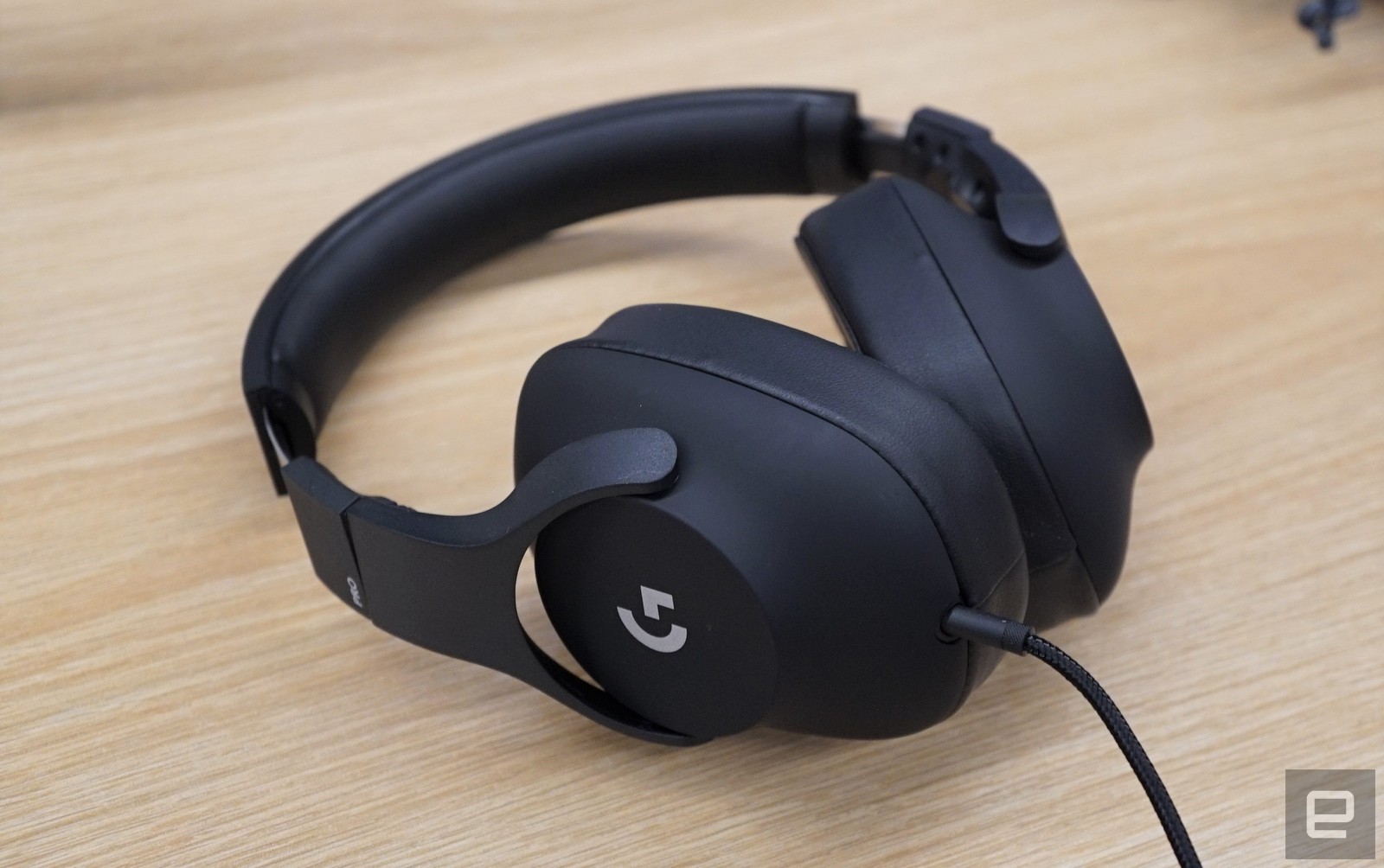
With the new G Pro headset, Logitech set out to make something that gamers could wear for hours on end, without getting fatigued. It's a fairly straightforward pair of headphones: It only offers stereo sound (no fancy surround option), and it relies on an analog audio connections. Instead of the sports mesh headphone material found on Logitech's other gaming headsets, though, the $90 G Pro sports soft leatherette. The company claims it offers 50 percent more sound isolation than before, but more importantly, the new material simply feels better. (The previous covering made my ears feel a bit itchy after a few Overwatch matches.)
The headphones feature Logitech's Pro-G drivers with a slightly more aggressive sound profile than last year's headsets. While I found the G433 and G533 to sound a bit flat, the G Pro accentuate bass, which makes plenty of gaming moments feel more satisfying. Some music fans prefer a neutral sound profile, but when it comes to games, that tends to sound dull. The G Pro comes with a removable microphone, which features noise-canceling and better sensitivity than past Logitech offerings. You'll need a separate microphone jack to take advantage of that feature, which could be a problem for some gaming laptops.
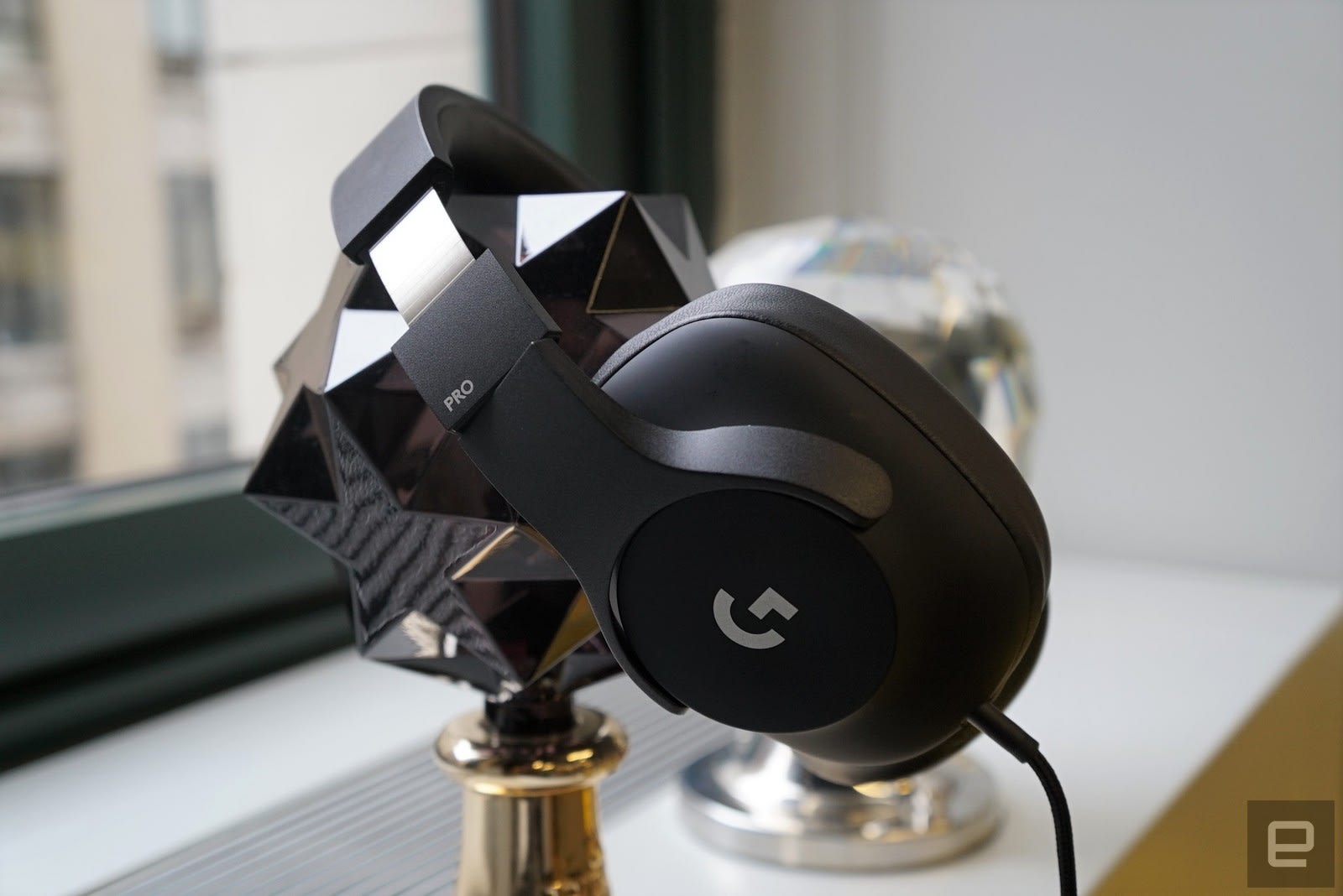
Logitech says it developed the G Pro based on feedback from eSports players, and it shows. In addition to the leatherette ear coverings, you've also got microsuede replacements in the box. While I missed the useful noise separation from Logitech's surround sound headphones, the G Pro still sounded excellent. I could easily make out the careful footsteps of other players looting gear in Playerunknown's Battlegrounds, or enemies creeping up behind me in Overwatch. I also found myself paying more attention to games than with Logitech's previous headsets, thanks to the improved sound isolation.
At $90, the G Pro sits in the middle of Logitech's gaming headphone lineup, but they're a solid pick if you're looking for a high-quality wired option. You'll be able to snag one of your own in April.


Read more of this story at Slashdot.
Valve is preparing to make another significant open-source code contribution in the very near future.
Valve developers are working on open-sourcing their Steam Networking Sockets library. This library is a basic network transport layer for games with a TCP-inspired protocol that is message-oriented, built-in re-transmission for greater reliability, bandwidth estimation, supports encryption, and will handle other features needed for a practical networking layer by modern games.
The SteamNetworkingSockets library is currently used by Counter-Strike: Global Offensive, Dota 2, and other games on Steam. This networking sockets library will be able to function independently of Steam and is being released under a three-clause BSD license.
It will be interesting to see how well this game networking sockets library works once the code is made available compared to the many other existing game networking libraries already available and several open-source projects, but should prove to be useful with it being good enough for CS:GO and other Steam multi-platform games.
Update:The initialized Git repository is at
GameNetworkingSocketsalbeit the code drop has yet to happen.
From the Appbase.io team:
We started building dejavu with the goal of creating a modern Web UI (no page reloads, infinite scroll, filtered views, realtime updates) for Elasticsearch with 100% client-side rendering so one can easily run it as a hosted app on GitHub pages, as a Chrome extension or as a Docker image.
Try it for yourself.
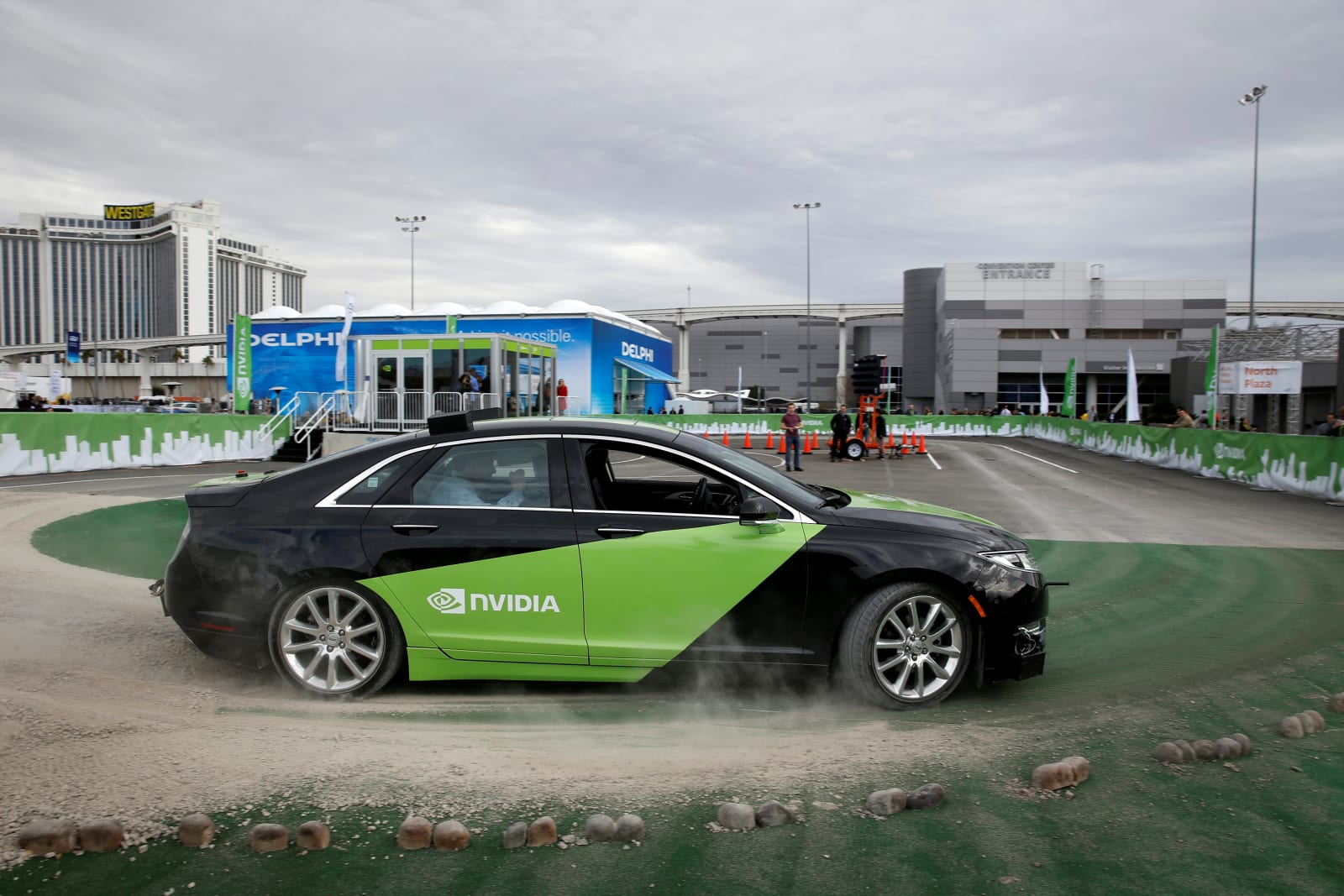
Amid the torrent of news at CES in January, it was easy to miss the unveiling of NVIDIA's Drive platform -- a way for the company to test out its self-driving algorithms through repeated simulations. At that point, it was more of a concept than an actual product. Today, the company revealed its Drive Constellation system, a multi-server setup that'll let its partners run those self-driving simulations on their own. Think of it as The Matrix for autonomous algorithms: It's a way to train those vehicles to deal with extreme situations, without endangering anyone in the real world. The news comes after NVIDIA announced that it'll be pausing its self-driving testing on roads, following last week's fatal Uber self-driving accident.
On stage at the company's GPU Technology Conference (GTC) today, CEO Jensen Huang described self-driving as "probably the hardest computing technology we've ever encountered." But, after the Uber accident, he says he was reminded just how important this work is. "We have to solve it step by step by step," Huang said. "We're dedicating ourselves to this problem. The grandest of computer problems."
On one end of the Constellation system is a server running NVIDIA's Drive Sim software. As you'd probably guess, it simulates all of the technology you'd find on a self-driving car, including sensors, cameras, radar and lidar (the light and distance measuring component). It's powered by the company's GPUs, each of which creates its own stream of sensor data. The simulation server can also render "photoreal data streams" to reflect all sorts of driving conditions, like a fierce blizzard or glare during a sunset.
Another server is powered by the company's Drive Pegasus software, which runs all of NVIDIA's autonomous car technology and processes the incoming sensor data. The Pegasus server sends its responses back to the simulation machine for validation. That feedback loop occurs 30 times a second, according to NVIDIA.
Using this dual server setup, car makers will be able to construct all sorts of extreme scenarios to see how their self-driving algorithms react. The obvious drawback is that it's tough to simulate every potential issue, but it's still better than relying entirely on real-world testing (especially since it can easily be run millions of times per day).
Like any machine learning algorithm, NVIDIA's self-driving technology will only get better with every simulation. At CES, the company unveiled its Xavier system-on-a-chip, which will let other companies quickly build up their own autonomous vehicles. NVIDIA says early access partners will get access to the Drive Constellation platform in the third quarter of this year.

NVIDIA will suspend all of its public road self-driving tests following Uber's fatal accident, a company spokesperson has told Recode. The company supplies chips for Uber's self-driving vehicles and it says that it needs to find out more about last week's crash. "The accident was tragic," a spokesperson said in a statement. "It's a reminder of how difficult [self-driving car] technology is and that it needs to be approached with extreme caution and the best safety technologies."
During his keynote today at NVIDIA's GPU Technology Conference, CEO Jensen Huang said the fatal accident reminded the company how important safety is when it comes to this type of technology. "It's hard," he said. "Safety is the single most important thing. It's really hard technology, it's probably the hardest computing technology we've ever encountered." He added that NVIDIA was dedicating itself to improving safety calling it "the grandest of computer problems." He didn't mention, however, that the company was suspending its self-driving tests.
Uber halted its testing following last week's accident as did Toyota and nuTonomy. Yesterday, Arizona's governor suspended Uber's ability to test its self-driving vehicles on the state's public roads. "Improving public safety has always been the emphasis of Arizona's approach to autonomous vehicle testing, and my expectation is that public safety is also the top priority for all who operate this technology in the state of Arizona," Governor Doug Ducey said in a letter. "The incident that took place on March 18 is an unquestionable failure to comply with this expectation."
Tempe's police chief has said that Uber was likely not at fault in the fatal crash.
Today, NVIDIA announced its Drive Constellation system -- a multi-server setup that will let autonomous vehicle developers test their algorithms through virtual simulations rather than real-life evaluations.
Via: Recode
While FreeBSD has a Linux compatibility/emulation layer that
allows it to run some Linux games, an independent community developer has been working on porting Epic Games' Unreal Engine 4 to FreeBSD.
FreeBSD developer "malavon" has been porting the Unreal Engine 4 game engine to FreeBSD and in the process getting most of the tech demos / code samples to build.
With this being an unsanctioned port, the support isn't destined for Epic Games' official code-base but is available via the developer's personal repository. The test target has been FreeBSD 11.1 AMD64.
More details on this in-progress Unreal Engine 4 port via
this FreeBSD.org forum thread. The Phoronix reader who tipped us off to this work was able to try the it and confirm they are in fact working.
GNOME contributor Yussuf Khalil has managed to uncover and resolve a bug in Clutter that was hurting GNOME's performance.
The developer has begun analyzing GNOME performance issues and one of the first things he uncovered were frequent spikes in GNOME's frametimes at regular intervals. He ended up finding out that the frequent spikes were caused by showing the seconds on the clock within GNOME Shell.
While not showing the seconds on the time make the large spikes in frame time go away, he uncovered the root cause within Clutter's text rendering code. Yussuf discovered that whenever the text changed, the layout of the text was recalculated. In the case of seconds on a clock, the layout though obviously should never need to change. With his minor patch, Clutter now checks to see if the size of the text is the same as before, if so only a redraw is triggered and not the entire re-layout process.
With this fix, the median frame-time drops from 16.97ms to 12.97ms.
The fix has been
mergedfor GNOME 3.30 though there is also a request to get it back-ported to GNOME 3.28.
Coming up in May is a GNOME Performance Hackfest in Cambridge, so there will hopefully be more performance improvements to pass along for GNOME 3.30.
Last week Intel
announced their open-source sound firmware projectwhile the latest project in the open-source realm comes via the Linux Foundation with the launch of OpenBMC.
The Linux Foundation is backing the OpenBMC project community with a goal of creating an open-source baseboard management controller (BMC) firmware stack that can be used across motherboards and computing environments.
IBM is contributing the initial code for OpenBMC and among the other organizations getting behind this initiative are Google, Facebook, Intel, and Microsoft. Among the reasons for working on OpenBMC are growing cloud deployments making conventional BMC software less practical. Having an open-source BMC software stack can also improve the security of the system as well as offering new configuration and monitoring potential.
The OpenBMC project should be appearing shortly at
OpenBMC.org.
Read more of this story at Slashdot.
ostechnix: Terminus - A cross-platform, open source, web technology based Terminal for modern age, inspired from Hyper.
